Home AboutArchivesBest Of Subscribe

There’s Something About “Mary”, Part Three

TV Comedy

Part OnePart TwoPart Three • Part Four (Coming soon!)

Previously, we talked about the history of Mary Tyler Moore’s 1978 variety series Mary, and analysed a half-finished episode hanging around online which was never transmitted. You would think that the story surrounding this show is already complicated enough, and it couldn’t get any more confusing.

Allow me to dissuade you of that notion.

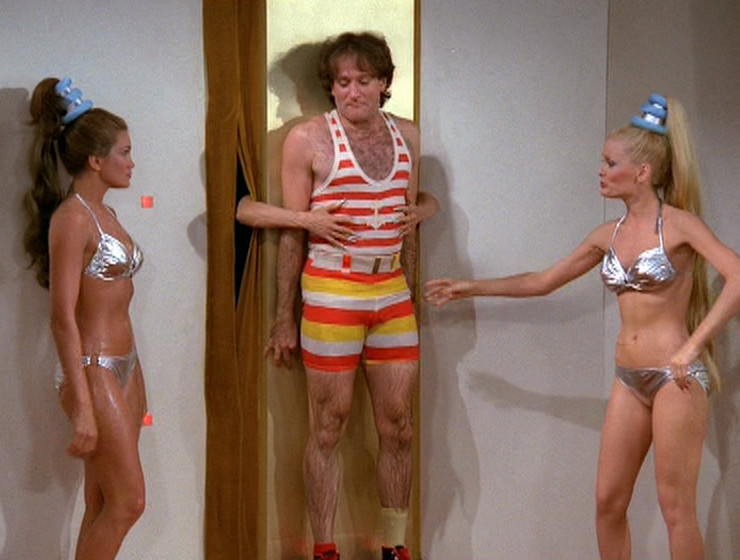
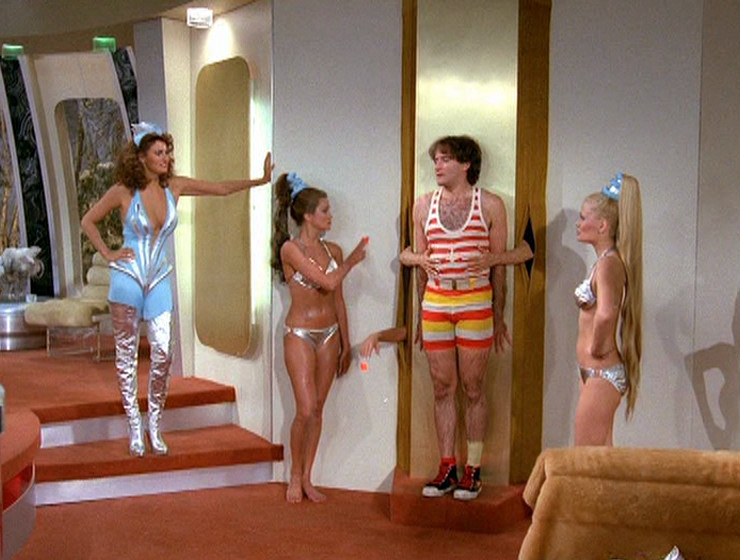
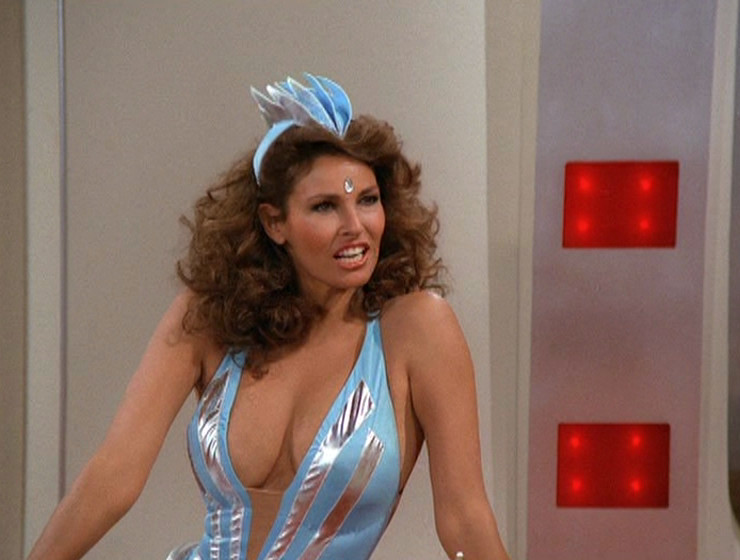
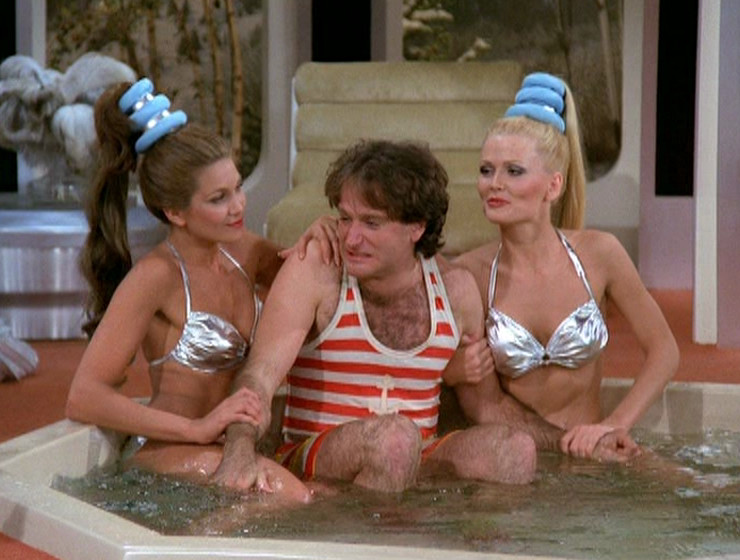
There is one more video of material which originated from Mary on YouTube. This one is named “‘Mary’ Episode (unaired?) – 1978”. I won’t keep you in suspense; comparing the contents of this video with what was billed in contemporary newspapers, I can confirm that it was indeed unaired.1

Unlike the previous unaired episode, this isn’t an unedited studio tape, but looks to be – mainly – completed. (I’ll be coming back to the “mainly” qualifier.) And more than that: unlike the other unaired material, we can actually come up with the date when this episode was supposed to have been broadcast: the 15th October 1978. A show which was supposed to air fourth in the run, and then was cancelled before transmission.

We don’t have to rely on guesswork when it comes to this. Plenty of contemporary newspaper coverage proves it beyond doubt. For instance, Cecil Smith reported the following in The Los Angeles Times on the 16th October:

“I wonder if CBS didn’t blow the whistle too early on “Mary,” which the network cancelled late last week. […] The show you didn’t see Sunday night was one of the brightest hours of the year. […]

I had dropped by the set of “Mary” to watch the show last month. At the time, they were working on their ninth show—they did 11. Unlike some of my colleagues, I was not too taken with the opening show on “Mary” — I thought it rather self-conscious and self-serving, despite the Ed Asner Dancers. They found another show for me to see – the Oct. 15 edition.

There were wonderful things in it. Mary revisited the set of the old Mary Tyler Moore Show, the newsroom of WJZ-TV in Minneapolis, where, as Mary Richards, she became a national institution. It seems the “atmosphere” – the extras who worked in the background while Mary, Lou, Murray and Ted occupied center stage – had never been told the series had ended. They were still at their desks, covered with cobwebs.

(“When I stepped on that set,” Mary told me later, “that was catch-in-the-throat time. There were tears.”)

In another marvellously funny sequence, she played Phyllis Marlowe, who had taken the place of her brother Philip, the private eye. The scene was choreographed hilariously to a narrator doing Raymond Chandler—it was beautiful parody down to the last elaborate metaphor.

And there was a number with Dick Shawn in which he languorously sang “Send in the Clowns” while a ballet of clowns came in and threw pies at him, tore his clothes off and generally did what clowns do.”

Yet again, this is an example of somebody who enjoyed Mary, despite most people treating it these days as something which was “obviously” terrible. And this is someone who hadn’t blindly loved the show – they disliked the first episode, and then were won round, albeit by (clearly flagged) unbroadcast material. I do realise I keep banging this drum, but it really is important to acknowledge that the way the show is usually talked about these days wasn’t a uniform opinion back in 1978, despite the poor audience figures.

Anyway, hopefully my main point is clear: every single sketch mentioned in Cecil Smith’s piece is in the video embedded at the top of this article. So case closed: this video really does contain the episode which was meant to air on the 15th October.

*   *   *

Back in 2017, the blog Tune in Tonight published a piece about Mary. It’s a piece which uses the video embedded at the top of this article as its main reference point. I have to be honest, I disagree with much of it – I could, for instance, put together a fair defence of the pushy date sketch as a very intentional piece of satire against awful men, rather than just bad jokes about date rape. But at least the article is trying to analyse specifics about the show, rather than just chucking around cliches.

Unfortunately, it also makes a bad mistake. Right at the end of the piece we are told:

Original airdate: September 24, 1978
Watch it here

And it quickly becomes clear that the writer has got confused about things entirely, and thinks that this video represents the first ever episode of Mary, and the first thing audiences in 1978 saw of the show. In reality, the only chance anybody outside the TV industry would have had a chance to see this material is if they, say, wrote for The Los Angeles Times.

Which means there’s a whole level of understanding regarding this material which Tune in Tonight is missing. As an example, it’s worth watching the striking sketch where Mary visits the WJM newsroom from The Mary Tyler Moore Show, from 2:04.2 Tune in Tonight has the following to say about it:

“Although one can assume that Moore was hoping audiences would see her as something other than Mary Richards, it’s not even three minutes into the episode before there’s a gag involving her returning to the old Mary Tyler Moore Show set, where extras are sitting covered in cobwebs, evidently awaiting her arrival. She looks around wistfully, and though it was likely unintentional, it puts a bummer edge on the show, as if she’s acknowledging that it’s a dud, and wants to be back in a familiar setting as much as her fans do.”

Here’s what I find fascinating about the sketch: the fact it wasn’t broadcast changes it significantly. It feels like it was intended to be a huge moment – a real talking point for the show. The fact that this attention-grabbing material never even made it to air in order to actually grab people’s attention is ten times more melancholy than anything Tune in Tonight identifies in the sketch itself.

As for the analysis regarding the end of the episode:

“The show closes with “whatever happened to” cards for each of the actors (even though the program would return the following week). In a gag that, even 24 hours after I watched it, I still don’t understand, Michael Keaton’s is left blank.”

Of course, the program didn’t return the following week. It didn’t even return “this week”. And as for why Michael Keaton’s still is left blank… I don’t think it’s a gag at all. I think this part of the show simply wasn’t quite completed, at least in the edit we have access to.

This is the problem when unfinished, unbroadcast TV shows are subjected to analysis by people who don’t understand how to interpret them. Special rules apply when dealing with programmes like this. Nothing about that video is how a real viewer experienced Mary back in 1978, and unless you understand this, it’s difficult to judge the show correctly or fairly.

*   *   *

The problem with Mary is that, wherever you turn, we run into problems similar to the above. And not just in YouTube videos, or in blog posts. In actual, professionally published books as well.

In the first part of this article, I mentioned that Mary and Lou and Rhoda and Ted (Simon & Schuster, 2013) has a brief and unflattering mention of Mary:

“The show faltered from the start, trying to combine sincere musical numbers with the “edgy” humor that made Saturday Night Live popular. To wit, one memorable number had Keaton and Letterman dressed up like characters from a scene in Deliverance, singing the Village People song ‘Macho Man.'”

I have to say, I would very much like to see Michael Keaton and David Letterman sing “Macho Man”. Sadly, it’s not online. And more to the point: I can’t find a single mention of such a routine appearing on the show in contemporary newspaper previews and reviews of Mary. Hmmmmmm.

So where is it mentioned? Well, it’s a story which has been repeatedly told by Merrill Markoe, a woman whose ludicrously influential career in comedy over many years is going to get completely ignored by me, in favour of her work on… hey, guess which show?

In the book And Here’s the Kicker (F+W, 20093) by Mike Sacks, Merrill tells us the following:

“Dave and I worked on a 1978 CBS variety show called Mary starring Mary Tyler Moore and featuring Michael Keaton… it was cancelled after three or four episodes, even though 60 Minutes was the lead-in and Mary Tyler Moore was America’s Sweetheart. The show was an uncomfortable combination of old showbiz-style variety mixed with a miscalculated attempt to include some of that wacky, absurdist comic sensibility that the kids liked so much from that new program Saturday Night Live.

For example, the Mary show did a parody of the Village People song “Macho Man” that had Dave and Michael Keaton dressed in L.L. Bean-catalog outfits, in a setting that was made to look like a scene from Deliverance. I forget where the comedy was supposed to be in all this. I do know the powers-that-be didn’t realize that “Macho Man” was a gay anthem. I also remember vividly that Dave was in real agony about this bit of levity.”

Colour me suspicious as to where Mary and Lou and Rhoda and Ted was getting its information from.

There is one earlier reference to the sequence I can find… on a Mary Tyler Moore interview on Letterman, broadcast on the 6th February 1986.

MARY: I saw this man dressed as a pirate…
DAVID: A pirate, a rat…
MARY: Doing “Macho Man”… no, you refused to do Macho, Macho Man…
DAVID: No, no, no…

This opens up the interesting possibility that Letterman didn’t actually take part in the completed “Macho Man” segment, at odds to other tellings of the tale. I guess we’ll never know unless we ever get hold of a copy.

Either way, you can all tell where I’m going with this one. I can find no contemporary proof that “Macho Man” ever aired on Mary – all I can find is people who worked on the show reacting to it with varying degrees of horror. Eleven episodes of Mary were made: three aired, eight were unbroadcast, and only two of those eight are online in some form or another. I would be willing to bet a substantial amount of money that the “Macho Man” segment was in one of those six unbroadcast episodes we haven’t seen. None of the primary sources here suggest that the segment aired; simply that it was shot.

The problem with all this is that Mary and Lou and Rhoda and Ted claims the “Macho Man” routine was a “memorable number”. In fact, it’s the only segment from Mary which the book specifically mentions. To which I say: memorable to who? Memorable to people who worked on the show, of course. But not memorable to anybody else seemingly, because I can’t find anybody else who mentioned it at the time. Most people these days just seem to be copying what Merrill has to say.

That just isn’t a fair way to treat the show. A far better example to use would be the Ed Asner dancers from the first episode, which attracted widespread comment from a variety of commentators at the time, both positive and negative. But hey, let’s grab a sketch which probably never aired, and use it to poke poor Mary with yet again, shall we?

*   *   *

Which leaves us just one final question. Why is it that Mary attracts so much negative comment today, with people falling over themselves to slag it off, unfairly or otherwise?

I have a few ideas. Join me next time for the EXCITING CONCLUSION.

With thanks to Tanya Jones.


  1. The Saturday Night Fever sketch contained within was mentioned by Mary Tyler Moore in pre-show interviews, and also briefly featured in CBS fall promos. While I still maintain that when discussing the sketch as a whole you need to flag it as unbroadcast, you can put together a credible argument that Mary must have been pleased with how it turned out. 

  2. It really looks like the real set from The Mary Tyler Moore Show rather than a recreation, which means that the real set was hanging around in storage over a year after the show ended. Which is interesting in itself. 

  3. First edition; it has since been re-released in an expanded form. 

Read more about...

There’s Something About “Mary”, Part Two

TV Comedy

Part OnePart Two • Part Three Part Four (Coming soon!)

Last time, I left you all with something of a poser. Clips from three episodes of Mary are sitting on YouTube in various forms. Are these the same three episodes which were broadcast back in 1978?

Certainly, most people seem to have either assumed that they are, or are simply uninterested in whether they are or not. Let’s take a look again at the YouTube video “Why Mary Tyler Moore’s 1978 “Mary” Bombed Big Time”:

The narration certainly leaves us in no doubt about what they think about poor Mary:

“From what I saw, there were two things which caused this programme to nosedive and crash so quickly. The writing was bad. At times, really bad.”

We then get a clip of Mary talking to the studio audience: “Let’s talk about Canada!”. Followed inevitably by a song about Canada. Neither works very well in clip form, I will admit, although I could make the best show in the world look bad by slagging it off and then throwing in a few clips out-of-context.

We are then told:

“So much of the comedy I saw felt forced, and simply wasn’t funny.”

Followed by part of an unidentified sketch featuring Mary, Swoosie, and Judith sitting on a sofa:

SWOOSIE KURTZ: Without another person.
JUDITH KAHAN: Just you.
SWOOSIE KURTZ: Solo.
JUDITH KAHAN: Uno.
SWOOSIE KURTZ: Solitary.
JUDITH KAHAN: Like mouldy cheese.

If anything, there is even less context given to this clip, so it’s simply impossible to judge it fairly. So let’s do the donkeywork ourselves. Where do these clips come from?

The answer: another video on YouTube, worryingly titled “‘Mary’ unknown episode 1978”.

The above video includes both the Canada material, and the sketch with Judith and Swoosie on the sofa, called “Not A Married Woman”. I think all the material comes across much better when watched in context. But that’s not really the point.

Because something else immediately becomes clear while watching this video: we’re not looking at a finished programme here. This is a studio tape, featuring raw footage of a studio audience session for the programme, including retakes. It also isn’t even complete – it ends halfway through a sketch. And needless to say, the completed programme isn’t available anywhere else online.

So our question is now slightly different: does this studio tape represent something which became a finished programme which transmitted on CBS in 1978?

[Read more →]

Read more about...

Electrocution Lessons

TV Comedy

The problem with finally getting round to watching loads of US sitcoms over the past year or so is that I immediately want to turn Dirty Feed into a fan site for each of them. Sadly, I have zero time to do this. In a parallel universe, somebody very rich is paying me to spend all my time writing stupid shit about All in the Family, rather than worry about World Cup weather delays.

So you’ll have to wait a few decades for my in-depth piece on why I’ve recently fallen in love with Married… with Children. Suffice to say that when you’re watching a show as measured and responsible as All in the Family, it’s a lovely contrast to also watch a programme which is simply interested as being irresponsible and gleefully unpleasant as possible.1

It’s also a show which is far better made and more thoughtful than it’s often given credit for. Take a look at the following clip from Season 5 episode “Do Ya Think I’m Sexy”, transmitted by Fox on the 18th November 1990. On the page, it’s a very standard gag: Bud gets an electric shock while mending the doorbell, because Kelly hasn’t turned off the electricity. Cue a Looney Tunes moment with a smoking Bud.

Now, there’s a very obvious way to shoot this scene if you’re making an audience sitcom: record the part with Bud going to fix the doorbell in front of the audience, and then play in a pre-recorded shot of him after being electrocuted. If the production was feeling brave, they could shoot his appearance after being electrocuted in front of the audience, with a recording break in-between to add the make-up and smoke effects to David Faustino.

Married… with Children does neither of these things. It decides the funniest thing is to do it all in one shot, in front of the audience. So that’s what they do. The result is a pure piece of stagecraft magic, and turns a standard gag on the page into something wonderful.

I wonder how many people were standing just outside the door, ready to do David’s hair, make-up, and to set off the smoke effects.2 Note also how brilliantly David rides the laugh when he reappears; one of the best things about Married… with Children is seeing him develop his comic timing over the first few years of the show. Christina Applegate’s corpsing is the icing on the cake.

This scene is everything I love about television. A production going out of its way to do something difficult; not to draw attention to itself, not to win awards, but just because it’s the funniest way to do something. A cut would hurt the rhythm of the scene – and at least subconsciously make it feel like cheat. And of course, doing it live in one take also vastly improves the studio audience reaction.

It’s a commitment to comedy which is stamped over every frame of Married… with Children. It is singularly interested in getting you to laugh as hard and as often as possible, and will do anything to get you there. And that’s why, no matter how unpleasant the show is being at any given moment, it’s also so goddamn lovable.


  1. This is not an idle comparison; both shows share a lineage, and not just in terms of being American videotaped audience sitcoms, a trend which started with All in the Family. No, there is an overt connection: co-creator of Married… with Children Michael G. Moye used to write for the Lear television factory, including All in the Family spin-off The Jeffersons

  2. It is notable that David never turns his back to the camera throughout the entire scene, so he was clearly already wearing the smoke mechanism from the beginning in order to save time. 

Read more about...

A Chill in the Air

Music

“There comes a moment in every electronic music fan’s journey when they discover Patrick Cowley.”

Andrew Ryce, liner notes for Hard Ware (2025)

I’m trying to think of the first time I heard of Patrick Cowley. I highly suspect it was one of the typical routes: from his epic 15-minute remix of “I Feel Love”, created in 1978. It was designed for the clubs, so obviously I get a great deal of enjoyment from listening to it on the sofa while devouring a Kitkat.

Perhaps my favourite track of his is one of the most mainstream – in intent and production, if not in actual success – “Tech-No-Logical World”, from his 1982 album Mind Warp. Over 40 years later, the concerns expressed in it feel as familiar as ever. Perhaps even more so.

The above is the radio edit, but if you love it, I highly recommend the proper version.

Mind Warp was made while Patrick Cowley had HIV/AIDS; he died in November 1982. This presents the opportunity for critics to say he was a tragic genius, taken from us far too soon, and all those cliches which often seem to get in the way of celebrating the real person. The problem is… he really was a genius, and he really was taken from us far too soon. It is impossible to overstate how much of his creativity we were robbed of, even if he had survived just five more years.

Such statements feel absurdly mercenary, as though the only thing Cowley had to offer the world was more damn music to cram into our greedy ears. Of course there was far more to him, as the people who knew Cowley would no doubt point out. And yet to you and me in 2026, the uncomfortable truth is that’s exactly what it means. We will never know him; we only know what we can hear. When some people die, you know every last drop of creativity had been long squeezed out of them. With Cowley, it feels like he was only just getting started.

We know this for sure. Because for the past few years, previously unreleased material from Cowley has been making its way out there, by people carefully going through his archives. The most recent efforts here have been from Dark Entries Records, in the form of releases such as School Daze (2013), Muscle Up (2015), Candida Cosmica (2016), Afternooners (2017), Mechanical Fantasy Box (2019), Some Funkettes (2020), Malebox (2022), From Behind (2024), and Hard Ware (2025).

There are so many gems in the above releases; to drag the subject back to Cowley’s death seems almost obscene. And yet one track from the above albums stands out to me; “Ice Age”, from Hard Ware. Dark Entries Records themselves warn us about the track in the release notes for the album:

“Hard Ware closes with the chilling synth-hymn “Ice Age,” in which Loverde vocalist Peggy Gibbons sings of a coming frosty apocalypse. The story told in “Ice Age” mirrors the coming AIDS crisis and feels like a haunting premonition from Cowley.”

They aren’t kidding. “Ice Age” is beautiful, haunting… and probably not the kind of thing to listen to last thing at night. It’s also the only track on Hard Ware to have a co-writer credit; Paul Parker, vocalist on “Tech-No-Logical World”.

As a piece of music, and as the aforementioned haunting premonition, I find it stunning. The liner notes to Hard Ware state that “all songs recorded 1979-1981”; sadly, there is no more granularity than that, although given the timeline of the AIDS crisis, it would be extraordinary to find out the track was recorded before 1981.

And yet that’s not what really gets me about “Ice Age”. Assuming 1981 as the recording date, and the fact that it was finally released in 2025, that’s a full 44 year gap between its creation, and the wider public being able to hear it. In those years, HIV/AIDS has gone from a deadly epidemic that public health authorities struggled to understand and deal with, to a disease which – caught early, and with the correct treatment – is largely manageable and non-fatal in many parts of the world.

To listen to something like this, unheard for over four decades, is extraordinary. Like a song which just plopped through a time hole, unbidden. Things which are released gather detritus; they gain – and lose – context through being heard, experienced, and talked about. “Ice Age” never had that. You know a song is truly obscure when a search for the lyrics online brings up nothing.

The result is a direct missive from the early days of the AIDS crisis, with nothing to get in our way. Raw reportage, however poetically expressed. Regardless of the merits of the song – of which there are many – that alone makes it one of the most remarkable things I have ever heard.

There’s Something About “Mary”, Part One

TV Comedy

Part One • Part TwoPart Three Part Four (Coming soon!)

On the 24th September 1978, a brand new Mary Tyler Moore variety series premiered on CBS. Simply titled Mary1, there was a full season order in place; many reports at the time suggested at least 22 shows, with an option for two more.

After three shows aired, the show was pulled from the airwaves for good.

This article is partly the tale of what happened to poor Mary. But more importantly: it’s also about the pitfalls of judging a series nearly five decades later, when the detritus surrounding a show can be extremely difficult to interpret correctly.

*   *   *

There was an obvious format which Mary could have gone for: something akin to How to Survive the 70s from seven months earlier. Numerous guest stars, perhaps a different, fairly loose topic every week, job done. Instead, Mary seemed to go out of its way to make life difficult for itself.

Guest stars were mainly eschewed, aside from a brief appearance by Carl Reiner in the opening episode. Instead, they went for a repertory cast, some quite well known, others at the start of their career: James Hampton, Swoosie Kurtz, David Letterman, Michael Keaton, Judy Kahan, and – the most famous of the gang at the time – Dick Shawn. This, at least, had some precedence: surrounding Mary with a solid team was one of the things which made The Mary Tyler Moore Show such a success.

Mary herself described the series as the following at the time, which was widely quoted in the press:

“The show will be made up primarily of sketches which hopefully display wit and grown-up comedy. There will also be some music and dancing but most of the numbers will grown out of the preceding sketch. For instance, a disco sketch evolves into a disco number. It’s a new form for me and I just love it.”

Some clips from the first episode are on YouTube. Sadly, as it’s not the full show, it doesn’t really give a full sense of proceedings; oddly enough, it seems determined not to let us see much of the actual singing or dancing. But it does at least give some kind of idea of the kind of programme Mary was.

[Read more →]


  1. This is not Mary’s 1985 sitcom, also called Mary

Read more about...

,

Compliance.

Internet / Other TV

In my day job, working in linear television, I have to deal quite a lot with compliance. On occasion, I even have had to issue my own official content warnings for various TV programmes.

It can, on occasion, be an exasperating experience. Of course, viewers need warning about certain kinds of content. But when a continuity announcement spends more time warning the viewer about potentially offensive content than setting up the actual programme, it can be a little annoying.

At times, I perhaps feel like “legacy” media needs to get with the times. Just a little.

*   *   *

Tonight, I posted a short Bluesky thread about Confessions of a Driving Instructor. As part of that thread, I posted an image of Lynda Bellingham with her left tit out.

Bluesky immediately labelled this as “explicit sexual images”. I am not exaggerating here. That is literally and actually the exact phrase they used. The BBC gets endlessly criticised for compliance culture… and yet Bluesky thinks an errant nipple is an “explicit sexual image”.

I have nothing to say, except: perhaps people should stop leaping on the BBC for every single damn silly thing, and consider what happens online. Just occasionally.

Brevity.

Internet

Sometimes it feels like the whole internet is a calculated exercise in talking at cross-purposes. Take for instance this post on Bluesky, by author Tom Cox:

“No other word has done more damage to the craft of writing in recent years than “content”. Even if you’re using the word “content” ironically, or as a cute little joke, don’t. When someone calls writing “content” they’re pissing on someone’s hard work & passion. “Content” is Technosatan’s henchword.”

I’ve never really had a problem with the word, because for me it has useful connotations that it doesn’t for others: as a technical term originating from 2000s discussions on web standards, where you’re distinguishing between CSS (visual design) and HTML (content). I just can’t bring myself to have visceral disgust for something that in my world, is rooted in something which helped people: something that made the web far more accessible to a much wider group of individuals.1

To me, the word just doesn’t have an automatic tinge of soulless corporate management-speak. I identify it as a technical term first. Yet I get it: a word which I associate with something helpful, is used these days by many in a fashion which is unhelpful. That’s so many internet arguments in a nutshell; different groups of people approaching a topic from different angles, and being grumpy that not everyone experienced it in exactly the same way.

So when I read this piece by Jeffrey Zeldman2, I am aware that this is probably just another pesky example of talking – thinking? – at cross-purposes. And yet something about it really did give me pause.

“What’s rare — what’s difficult — is knowing when you’ve said enough. Cutting the sentence that’s technically correct but doesn’t earn its place. Trusting the reader. Trusting the idea. Trusting the white space to do work.

Brevity was always a discipline. Now it’s a statement. When everything around you is excessive by default, choosing fewer words takes courage. It says: I thought about this. I edited. I respected your time more than I needed to show my work.”

I really don’t think this is wrong, per se. But I see a lot of advice for writers which focuses on brevity. It has a long and storied history. But I rarely see anybody giving the other side: that it can be incredibly easy to not quite write enough, and to not give your reader vital context.

It’s a problem I’ve run into constantly here on Dirty Feed, and with good reason: my knowledge of television is often deep rather than wide, which is the exact opposite of most people. So when I’m writing about some old show which I love, I’m often quite far into the weeds, because for me that’s where the interesting stuff is. If you know as much about the programme I’m writing about as I do, then you’ll join me with no problem. If you don’t, then you’re going to struggle.

But crucially: with the right bit of context at the beginning, I can sometimes drag more people along for the ride. I never used to have to do this when I wrote about Red Dwarf for Ganymede & Titan; when writing specifically for a fan audience, it’s just far less of a problem. But it gave me bad habits when trying to write about things here, and it took many years to get rid of them. It took a whole decade of writing Dirty Feed before I even started to get better at this.

Even now, I run into problems, on articles which you really would think were plenty long enough already. Take, for instance, this epic five-part series on The Young Ones and its infamous flash frames. In total, those pieces amount to over 15k words; surely I said everything I needed to say on the subject?

But I don’t think so. I think it’s missing a whole part, in fact. A part which gives some proper context to the history of flash frames when it comes to television in general, and comedy in particular. A part which talks about whether flash frames actually do influence audiences in any way, or whether that’s a load of old hooey. When I first published those pieces, one person in particular chastised me a little for not talking about that latter point; I was a bit grumpy at the time, but I think they were right.

15k words, and there needed to be more. I needed to pull back just a little and give more context for a wider audience, and I abjectly failed to do so. If I had, maybe those pieces might have been really successful, not just successful by the standards of this site.3

Brevity can be important. But it’s equally as easy to simply not write enough.


  1. It amuses me that many people who dislike the word “content” are the same people who get riled up about people not using alt text on Bluesky, given this context of accessibility. 

  2. Ironically, someone who was heavily involved in work on those web standards from twenty years ago, though this is an entirely different topic. 

  3. I may try to rectify this in an eBook of those pieces one day, if I can find the time. But even as I ponder this, I think about how vital some of the videos are in those pieces, and blanch at trying to adapt it for text. This is one huge reason why I’ve always struggled with putting together a book of my work here: I write for the internet, and everything the medium offers. 

Read more about...

Keep ‘Em Peeled

Other TV

As long-time readers of this site will know, I have a fascination with television pilots. Let’s be specific about what I mean, here: a true pilot isn’t just the first episode of a TV show. It’s something made separately from the rest of the series, as a first attempt at an idea. I find those first attempts endlessly interesting.

These pilots make their way to an audience in many different ways. Sometimes, as with Hi-de-Hi!, they are literally transmitted as a one-off show, well before the rest of the series.1 Others, like Yes Minister, are broadcast as part of the first series of the programme, sometimes with a few extra edits before transmission. There are ones which were transmitted purely by mistake, as per Absolutely Fabulous. And sometimes, like Drop the Dead Donkey, they were never transmitted at all, and instead became available on DVD years down the line.

And then there’s the truly interesting ones, where the pilot of a show has never been officially shown or released. One such example is Colin’s Sandwich, which I have a copy of here, but have shamefully never got around to writing about.2 Sometimes, we don’t even know if these pilots still exist or not. I talk about one of the Knightmare pilots here, but it’s never leaked in all the years that the show has had an ongoing and active fandom, which makes me suspicious.

Tracking these things down – or at least attempting to – is half the fun. But once, just once, I didn’t have to make any effort in order to see an obscure pilot.

It was piped directly to me, unbidden.

[Read more →]


  1. The pilot of Hi-de-Hi aired on New Years Day 1980; it was then repeated on the 19th February 1981, just before the new series of six more episodes. 

  2. Friend of the site Billy Smart has written a little about the Colin’s Sandwich pilot here

Read more about...

,

Letterbollocks

Film / Internet

For anybody who reads this1, it will not have escaped your attention that Dirty Feed has been pretty quiet over the last couple of months. Quieter than it’s been for nearly a decade, in fact.

The reasons for this are numerous. I have a brand new job which is taking up a lot of my mental energy. I’m currently learning how to drive, which is taking up even more of my mental energy. And yes, OK, I’m also in the middle of a really fucking difficult piece of writing, and it’s not going very well. My brain has rebelled and is sulking.

But I need to write somehow, even if it isn’t here. So recently I’ve been spending a lot of time reviewing films on Letterboxd, with my favourite recently being this piece on The Three Caballeros. It really is lovely to write about something other than TV comedy for a change, stretching muscles I keep forgetting I have.

The other joy of Letterboxd is that writing there is almost the exact opposite of Dirty Feed. Here, my pieces have got so complicated over the past couple of years that writing the necessary introduction and context has become an absolute pain. (Getting across the context for The Mary Tyler Moore Show for a UK audience is hard enough, let alone her obscure variety shows which never even made it across the pond.) With Letterboxd, the context is already there on the main page for each film, before I even start. It means I can concentrate on writing the good bit, rather than the bit I dutifully have to write in order for anybody to understand the good bit.

It is an utter delight.

[Read more →]


  1. I’m not linking to this piece on social media, so that means: people who subscribe to my RSS feed, people with email subscriptions, and people who manually visit the site occasionally to see if I’ve written anything. Hello. I love you all.